Coins
The gold coins offered by Fibank Cyprus are sold only in the category of bullion coins. A bullion coin is a coin struck from precious metal and kept as a store of value or an investment, rather than used in day-today commerce.
Our coins are available in both gold and silver with limited quantities and various weights.
Bullion Coins
Bullion coins offered by Fibank Cyprus:
Gold coins
The gold coins offered by Fibank Cyprus are type of bullion coins.
Why are bullion coins a good investment?
- The golden content is guaranteed by the issuing government;
- They are minted from high purity gold;
- Their value is different from the minted face value. Their actual value derives from the gold content and its daily changing quoted price on the world stock exchanges;
- They have been minted by the governments of different countries since the year 1800 in limited series of a maximum 100 000 coins (some series consist of even fewer than 10 000 coins)
- The design of some coins changes every year (the Australian Kangaroo, for example)
A certificate guarantees the authenticity of the bullion coins.
 |
Australian Kangaroo1 troy ounce (31.1035 grams) gold assay 999.9 (24-carat), diameter 32.1 mm Obverse: Bust of Queen Elizabeth II, by Raphael Maklouf, right profile. Reverse: A kangaroo, one of the symbols of Australia. The coin has a face value of 100 Australian Dollars and is struck by the mint in Perth. It is the only major, legal means of payment made of pure gold to change its design each year. The number of coins of each mintage is also determined annually. Thus the Australian Gold Kangaroos are of interest not only to investors but to collectors as well. The following varieties of "Australian Kangaroo" exist: 1 kg, 10, 2, 1 1/2 1/4, 1/10 and 1/20 troy ounce.
Prices: • 1 oz: € 1540 • 1/2 oz: € 763 • 1/4 oz: € 383 • 1/10 oz: € 161 • 1/20 oz: € 90 |
 |
American Eagle
|
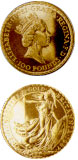 |
Britannia1 troy ounce (31.1035 grams) gold assay 916.7 (22-carat), diameter 32.69 mm Obverse: Bust of Queen Elizabeth II by Ian Rank-Broadley, right profile. Reverse: Britannia with a helmet and a shield, carrying a trident in her right hand and an olive branch in her left hand. This imposing figure by the sculptor Philip Nathan is reminiscent of Britannia depicted on the florins of Edward VII between 1902 and 1910. The coin has a face value of 100 GBP and is minted by the Royal Mint of Great Britain. The first mintage of "Britannia" was in 1987. Prices: • 1 oz: € 1367 • 1/2 oz: € 685 • 1/4 oz: € 344 • 1/10 oz: € 160 |
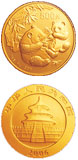 |
Chinese Panda1/2 troy ounce gold assay 999/1000, diameter 32.05 mm Obverse: Chinese Panda. Reverse: Beijing's Temple of Heaven. The following varieties of the golden "Chinese Panda" exist: 1/2, 1/4 and 1/10 troy ounce Prices: • 1 oz: € 1540 • 1/2 oz: € 685 • 1/4 oz: € 383 • 1/20 oz: € 110 |
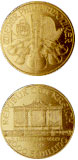 |
Der Wiener Philharmoniker1 troy ounce (31.1035 grams) gold assay 999.9 (24-carat), diameter 37.0 mm Obverse: Selected musical instruments of the world famous der Wiener Philharmoniker. Reverse: The organ in the Golden Hall of der Wiener Musikverein. The coin has a face value of 2000 Austrian shillings and is produced by the Austrian Mint. The first mintage, consisting of 1 and ? ounce coins datеs back to 1988. In 1991 a coin of 1/10 ounce was minted and in 1994 one of ? ounce. The pure gold and the uniquely refined image, created by Thomas Pesendorfer, head of the engraving department of Die Muenze Oesterreich, make the "Der Wiener Philharmoniker" the best selling European coin. It is no chance that "the Numismatist" name it "The European gold coin". The following varieties of the gold "Der Wiener Philharmoniker" exist: 1, 1/2, 1/4 and 1/10 troy ounce. Prices: • 1 oz: € 1540 • 1/2 oz: € 685 • 1/4 oz: € 383 • 1/10 oz: € 146 |
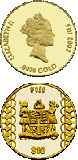 |
Fiji, New Zealand1/10 troy ounce (3.11 grams), gold assay 999.9, diameter 16 mm Obverse: Bust of Queen Elizabeth II, by Raphael Maklouf, right profile. Reverse: The Coat of Arms of Fiji Islands. The coin has a face value of 10 Fiji Dollars. Prices: • 1/10 oz: € 137 • 1/20 oz: € 87 |
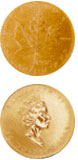 |
Canadian Maple Leaf1 troy ounce (31.1035 grams) gold assay 999.9 (24-carat), diameter 30.0 mm Obverse: Maple leaf, the most recognised symbol of Canada. Reverse: Bust of Queen Elizabeth II in a right profile. The coin has a face value of 50 Canadian Dollars and was produced for the first time in 1979 by the Royal Canadian Mint. The pure gold content and the exquisite design turn this coin into a serious competitor to the famous "American Eagle" at the world stock exchanges. Prices: • 1 oz: € 1540 • 1/2 oz: € 685 • 1/4 oz: € 380 • 1/10 oz: € 139 • 1/20 oz: € 112 |
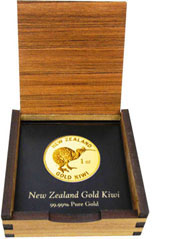 |
Kiwi, New Zealand1 troy ounce (31.1035 grams), gold assay 999.9, diameter 32 mm Obverse: The kiwi, the national bird of New Zealand, facing right. The following varieties of the "Kiwi" coin exist: 1, 1/2, 1/4, 1/10 and 1/20 troy ounce. Prices: • 1 oz: € 1367 • 1/2 oz: € 685 • 1/10 oz: € 139 • 1/20 oz: € 77 |
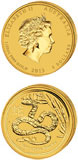 |
Gold coin "Australian Lunar Year of the Snake 2013"
|
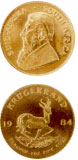 |
Krugerrand1 troy ounce (31.1035 grams) gold assay 916.7 (22-carat), diameter 32.6 mm Obverse: Bust of Paul Kruger, President of the South African Republic from 1883 till 1902, left profile. Reverse: South African springbok (Antidorcas Euchore), national symbol of South Africa, leaping to the right. This is the only bullion coin which has no face value engraved. This is determined by the daily quoted price of gold. The first mintage of Krugerrand (or shortly named Kruger) was produced in 1967 by the South African Mint and consisted only of 1 troy ounce coins. The idea of its production belongs to the South African Mining Chamber, which was set up to help market South African gold. In 1980 the minting of of 1/2, 1/4 and 1/10 troy ounce Krugers began. As of today over 54.5 million Krugers have been sold worldwide (46.3 million ounces or 1440 tons), which puts this coin at the top of total world sales. The distributor of the famous gold Krugers is Rand Refinery Limited. The following varieties of the "Krugerrand" exist: 1, 1/2, 1/4 and 1/10 troy ounce. Prices: • 1 oz: € 1374 • 1/2 oz: € 685 • 1/4 oz: € 346 • 1/10 oz: € 139 |
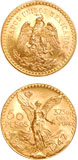 |
Centenario, Mexico41.66 grams, gold assay 900, diameter 37 mm Obverse: An eagle with outspread wings. Reverse: Winged Victory.
Price: • 41.66 g: € 1648 |
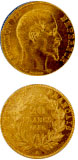 |
NapoleonAbout 1/5 troy ounce (6.4516 grams) gold assay 900 (about 21.6-carat), diameter 21 mm Obverse: Bust of the French Emperor Napoleon III (1808-1873) right profile. Reverse: Laurel wreath. The French Napoleon is undoubtedly the modern coin with the richest historical value, minted in Paris, Strasbourg and Lyon from 1852 to 1870. The figure engraved on the obverse side of is Charles Louis Napoleon Bonaparte, nephew of the famous Napoleon I Bonaparte. Charles Louis Napoleon was elected president of France at the time of the Second Republic, established by the revolution of 1848. A few years later, as result of the coup d'etat of December 2nd 1851, the French Republican Assembly was dissolved and Louis Napoleon was proclaimed Emperor under the name Napoleon III. Thus a two-decade period of prosperity began in France. The Franco-Prussian War of 1870, the surrender of Paris after the 132-day siege and the abdication of Napoleon III marked the end of this remarkable period. Later on the Third Republic was established in France and its turbulent history lasted till World War II. After the establishment of the Second Empire in 1848 a notable reconstruction of Paris began, a license was given for foundation of the the first French investment banks, and the signing of the Commercial Treaty for Free Trade with Great Britain marked the beginning of a new era in the world trade. During this era international payments were made with gold coins, the most famous of which was the French Napoleon. It turned into a European gold coin standard, and the monetary units of Italy, Belgium and Switzerland were minted like it. The French Napoleons, together with some gold coins of the Ottoman Empire were the main tender in Bulgaria until 1878. Even after this date, when the Bulgarian Lev was created, the gold Napoleon continued to play its role in Bulgarians’ life. It continued to be one of the coins used for international payments and at the same time it was our ancestors’ favourite in the field of investments and collections. The Napoleons, put aside for "hard times", are passed over the generations and are a part of many Bulgarians’ family history. Price: • € 276 |
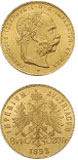 |
8 Florin (20 Francs) Franz JosephAbout 1/5 troy ounce (6.4516 grams) gold assay 900 (about 21.6-carat), diameter 21 mm Obverse: Bust of Franz Joseph I (1848 - 1916), right profile. Reverse: The Austrian Coat of Arms. This is one of the most famous historical gold coins, well known in Bulgaria. Nowadays the 20 Francs of Emperor Franz Joseph I are minted again by the Austrian government, which provides a guarantee for its gold content. Price: • € 257 |
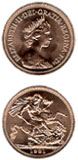 |
Elizabeth II New Sovereign7.988 grams gold assay 916 2/3, diameter 22 mm Obverse: Bust of Queen Elizabeth II in right profile. Reverse: St. George and the Dragon.
Price: • € 345 |
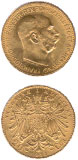 |
20 Corona Franz Joseph 19156.775 grams gold assay 900, diameter 21 mm Obverse: Bust of Franz Joseph I (1848 - 1916), right profile. Reverse: The Austrian Coat of Arms.
Price: • € 270 |
With more than forty years of experience, New Zealand Mint is a leader in minting gold and silver bullion, and collectible coins.
Fibank Cyprus offers you a special collection of coins especially minted by New Zealand Mint.
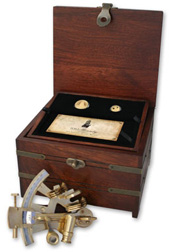 |
Collector’s coins "Bounty" 2-coin set
|
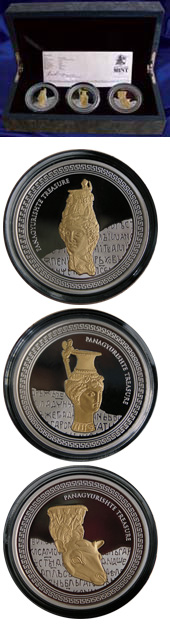 |
Panagyurishte Treasure 3-Silver Coins Set
|
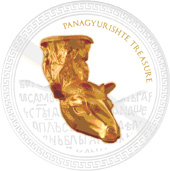 |
Panagyurishte Treasure Silver Coin Gold-gilded - Riton animal head
|
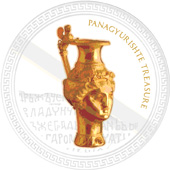 |
Panagyurishte Treasure Silver Coin Gold-gilded - Jug with handle
|
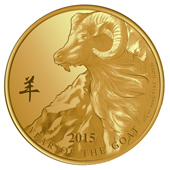 |
Gold coin "Year of the Goat 2015"
|